Getting started
Three knives: and why the fourth is a mistake
A 20 cm chef’s knife does around ninety per cent of the cutting in any kitchen. A paring knife does the small work a big blade is clumsy at, and a serrated bread knife does the one thing neither can — cutting through a crust without crushing what is inside. Everything after those three is specialisation, and most of it never leaves the block.
By Jean-Benoit Buisson
Three knives, and one deliberate omission.
The chef’s knife
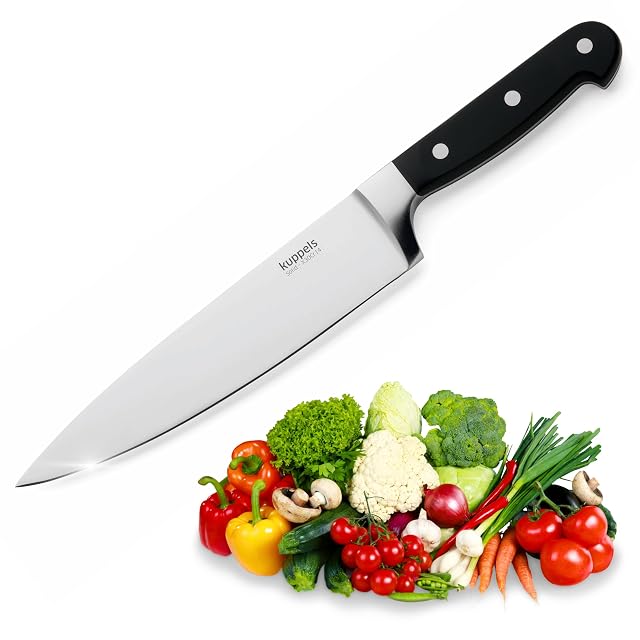
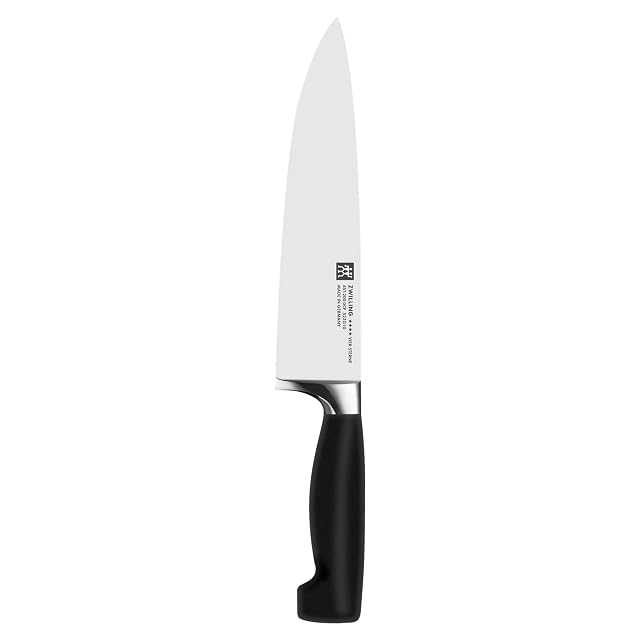
The Kuppels 20 cm in X30Cr14 chrome-vanadium hardened steel, full tang and balanced. A named alloy and a full tang at this price is the honest entry point. If the budget stretches, the Zwilling 20 cm is FRIODUR ice-hardened special steel with a deep bolster, made in Germany.
The paring knife
The Victorinox pair — two 8 cm blades with a straight edge and a centre point, light ergonomic handles, stainless. Two of the most-used small knife in any kitchen. If you want one that will be handed down, the Instrumentenrw pair is Solingen-made stainless with real beech handles.
The bread knife
The Moritz & Moritz 20 cm in German knife steel, serrated, stated rust resistant, and recommended for tomatoes as well as loaves. A serrated edge saws rather than presses, which is why it does not crush a soft tomato or a fresh loaf.
Why not a fourth
A boning knife, a santoku, a cleaver and a filleting knife are all genuinely better at one job. None of them is better at the jobs the three above already do, and each one is a knife that dulls in a drawer waiting for an occasion.
What to buy instead of the fourth knife
A whetstone. A sharp cheap knife outperforms a blunt expensive one, every time.