Induction
Induction: the pans that work, and two that do not
Induction does not heat a pan; it makes the pan heat itself, which only works if the base is ferromagnetic. Most modern pans are, and a few good ones are not — including two made in France that are otherwise among the best coated pans here. This guide names both, so you do not find out after delivery.
By Jean-Benoit Buisson
Induction is the one hob type that refuses pans outright. Here is how to choose without guessing.
The pan that publishes its induction base
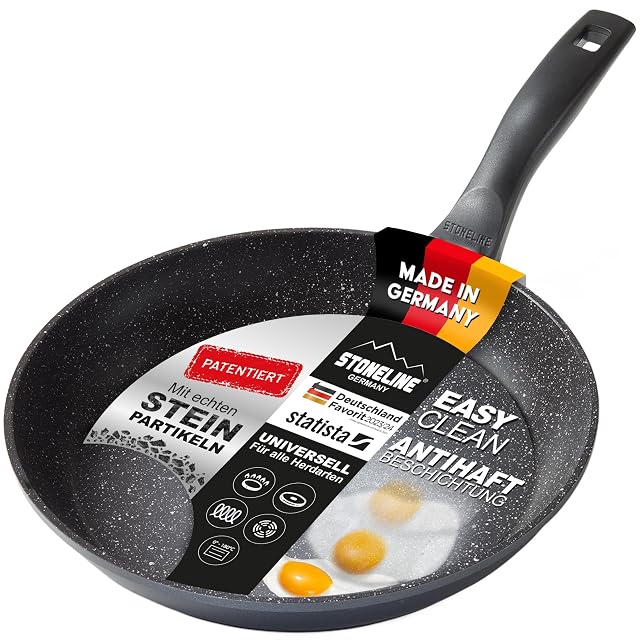
The Stoneline 28 cm publishes 4.7 cm of depth, 2.3 litres of capacity and — the useful one — a 22.8 cm induction base. A base narrower than the ring gives you a hot centre and cool edges, and almost nothing else in this catalogue tells you the figure.
The stainless option
The Rowenta 28 cm is uncoated 18/10 on a Thermo-Fusion induction base with a riveted cast stainless handle. Uncoated stainless is the pan that outlives every coating, and it wants a proper preheat.
The budget option
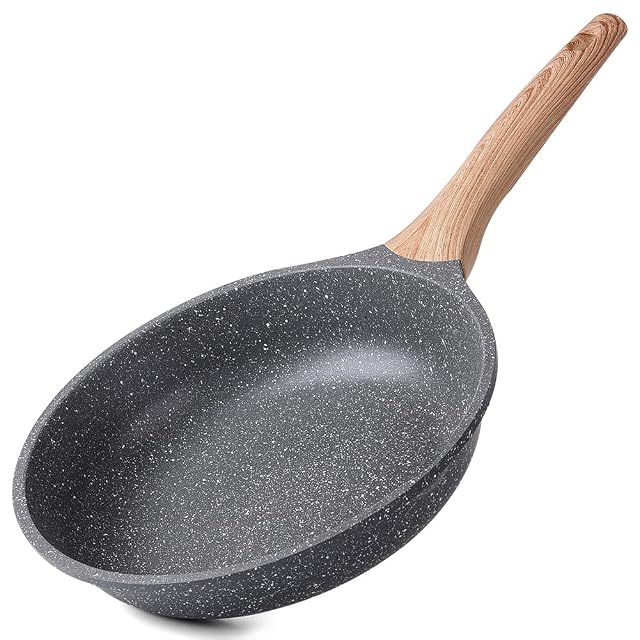
The Zuofeng 28 cm states a magnetised base and a granite-effect nonstick on cast aluminium, dishwasher safe. Cast aluminium is not magnetic by itself; a magnetised base is a disc bonded to it, which is how coated aluminium pans reach induction hobs at all.
For pancakes
The Endusor 26 cm crêpe pan states an iron-core induction base and a published weight of 900 g. Weight matters on a crêpe pan: a light one cools the moment the batter lands.
For a wok
The WMF 28 cm in Cromargan 18/10 with a ceramic coating, a TransTherm base and a stated 400 °C in the pan.
The two to avoid on induction
The Tefal 26 cm grill pan and the Tefal 28 cm wok. Both state that they are not induction compatible. Both are otherwise excellent, and neither is for you.