Choosing
Eggs: the one job that decides which pan you own
An egg sticks to almost anything and it cooks fast enough that a slow pan ruins it. That makes it the honest test of a frying pan: a pan that does eggs well does everything else too. Shape matters as much as surface — a flat pan with low sides lets a spatula underneath, and a deep one does not.
By Jean-Benoit Buisson
Eggs are the test. Here is what passes it.
The shape that matters
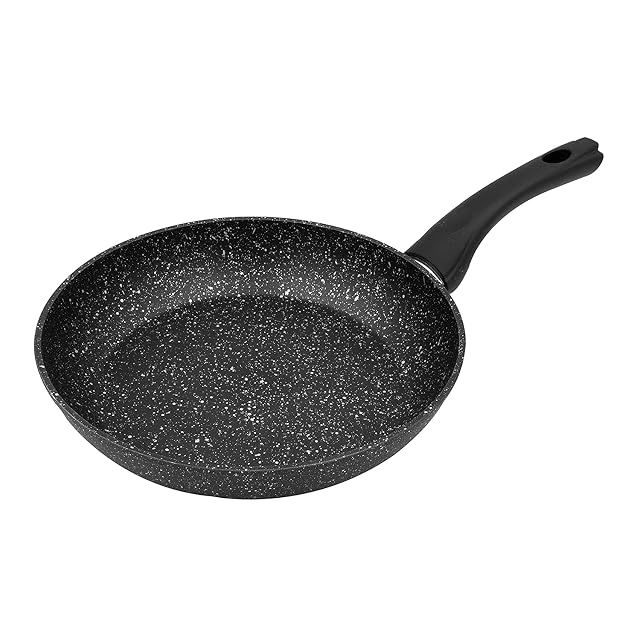
A flat pan with low sloping sides. The Russell Hobbs 25 cm is cast aluminium with a stated PFOA-free nonstick and describes itself as a flat omelette shape — that geometry is what lets a spatula get underneath from any angle.
The everyday coated answer
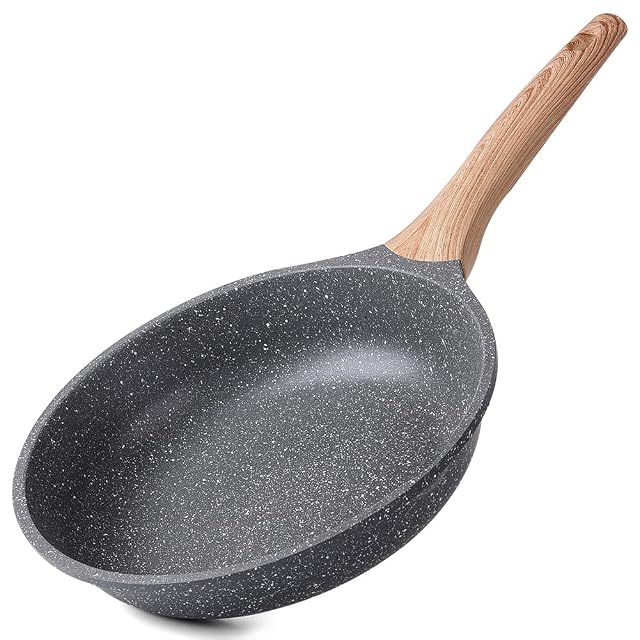
The Blackmoor 28 cm ceramic nonstick, stated PFAS-free, induction compatible, hand wash only. The hand-wash instruction is the price of the ceramic surface; ignore it and the pan stops releasing early.
The one that lasts
The de Buyer 24 cm in uncoated carbon steel, beeswax-protected, with a riveted angled handle. Carbon steel is seasoned like cast iron and much lighter. Wash the beeswax off before the first use, season it, and it becomes the best egg pan here — after a month, not on the first day.
The budget answer
The Zuofeng 28 cm, granite-effect nonstick on cast aluminium with a magnetised base, dishwasher safe.
The PFAS-free ceramic answer
The Fackelmann 25 cm in recycled aluminium with a stated PFAS-free ceramic coating and a Bakelite handle rated to 150 °C. That handle rating tells you plainly it does not go in the oven — which is more useful than an unqualified “oven safe”.
The rule that beats the pan
Medium heat and enough fat. An egg on a screaming pan sticks in any surface, coated or not.